
Introduction: The Quiet Cost of Living Someone Else’s Vision
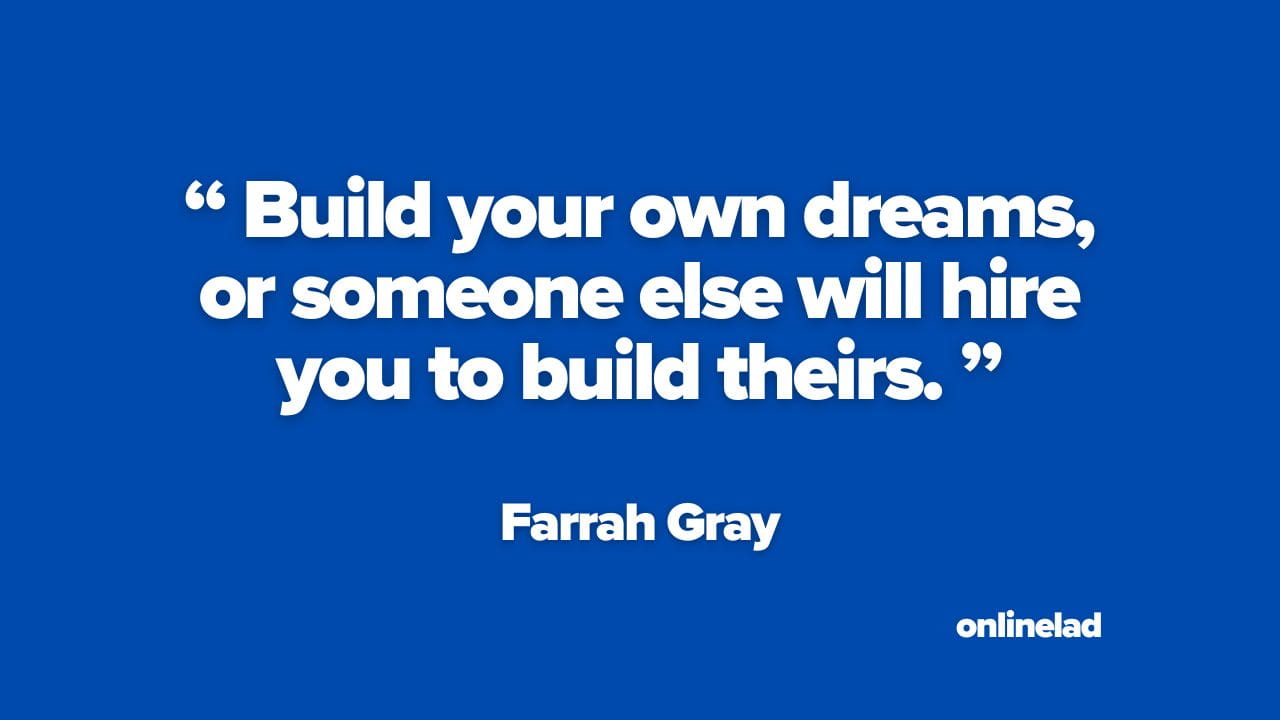
“Build your own dreams, or someone else will hire you to build theirs.” It is a sentence that lands with a kind of calm force, the sort that does not shout but stays with you long after you have read it. Attributed to
In modern life, the pressure to be practical often overrides the pull to be purposeful. Careers are chosen for security rather than meaning. Time is traded carefully, but rarely questioned. Dreams are postponed with the promise of “one day”, a phrase that quietly stretches into years. Against that backdrop, Gray’s words resonate because they are not anti-work or anti-success. They are about agency. About deciding whose future your energy is really serving.
This quote matters now more than ever. We live in an age of constant comparison, where success stories are endlessly visible and the metrics of achievement are loudly defined by others. It is easy to mistake motion for progress and productivity for purpose. Building someone else’s dream can look impressive on the surface. Good title. Good pay. Social approval. Yet beneath that can sit a persistent sense of misalignment, a feeling that you are capable of more, or at least something different.
The power of this quote lies in its simplicity. It does not romanticise struggle or demonise employment. Instead, it presents a clear choice. You can invest your creativity, discipline, and resilience into a vision you believe in, or you can rent those qualities out indefinitely. The challenge, and the invitation, is to reflect on which path you are truly on.
Quote in Context
Farrah Gray is not a theorist speaking from a distance. He is an entrepreneur who experienced both extreme poverty and extraordinary success at a young age. That lived contrast gives weight to his words. When Gray talks about dreams, he is not referring to vague wishes or motivational slogans. He is talking about ownership, about deciding early that your time and talent are assets, not just obligations.
The context of this quote sits firmly within entrepreneurial thinking, but its relevance extends far beyond business. At its core, it reflects a long-standing tension in human life. The pull between security and self-direction. Historically, most people had little choice but to serve the ambitions of others, whether through class systems, rigid institutions, or limited opportunity. What makes the modern era different is not the absence of hierarchy, but the presence of choice, at least in theory.
Gray’s words challenge the assumption that employment is neutral. To be hired is not simply to earn money. It is to contribute to someone else’s long-term vision, values, and goals. There is nothing inherently wrong with that. Societies function because people collaborate. The quote becomes powerful when it forces an honest question. Is this collaboration aligned with what you want to build for yourself, or is it a substitute for having that conversation at all?
Culturally, the quote also pushes back against the myth that dreams are indulgent or unrealistic. It reframes them as responsibilities. If you do not take your own ambitions seriously, the world will happily put your energy to use elsewhere. In that sense, the quote is less about rebellion and more about accountability. It reminds us that passivity has a cost, even when it feels comfortable.
Finding the Deeper Meaning
At a deeper level, this quote is about self-respect. Building your own dreams does not necessarily mean starting a company or rejecting structure. It means recognising that your inner life, your aspirations, and your sense of purpose deserve deliberate attention. When those are ignored, they do not disappear. They resurface as frustration, restlessness, or quiet regret.
Psychologically, the message speaks to agency. Human beings thrive when they feel a sense of control over their direction. When that control is absent, even success can feel hollow. You may be performing well, meeting expectations, and earning praise, yet still feel disconnected. This is the emotional cost of living reactively rather than intentionally.
The quote also touches on modern pressures around identity. Many people define themselves almost entirely by what they do for work. When that work is disconnected from personal values, identity becomes fragile. Confidence suffers because it is built on external validation rather than internal alignment. Building your own dream, even in small ways, restores a sense of authorship over your life.
There is also a quieter theme of discipline embedded here. Dreams are often framed as passion projects, but Gray’s wording implies effort and construction. Building is active. It requires patience, consistency, and the willingness to tolerate uncertainty. In contrast, being hired to build someone else’s dream often offers clearer rules and faster rewards. The deeper meaning of the quote lies in recognising that long-term fulfilment usually demands short-term discomfort.
Ultimately, this is a call to examine where your best energy goes. Are you consciously choosing your path, or simply following the one laid out in front of you? The answer does not need to be dramatic, but it should be honest. Because the moment you start taking your own dreams seriously, you begin to live with a different kind of confidence, one rooted not in approval, but in purpose.
Relevance to Modern Life
In everyday life, the idea of building your own dreams often feels abstract, even indulgent. Bills need paying. Responsibilities stack up. There is a steady pull towards stability, towards doing what works rather than what matters. This is why the quote remains so relevant. It speaks to the quiet trade-offs people make without ever consciously agreeing to them.
In work, this shows up as careers that look successful but feel oddly hollow. Many people are not unhappy with their jobs, but they are not fully present in them either. They perform well, meet expectations, and progress steadily, yet carry a low-level sense of being slightly misplaced. The quote does not suggest abandoning structure or rejecting collaboration. It asks a simpler question. Is your work contributing to a life you recognise as your own, or is it merely filling time efficiently?
In relationships, the message lands just as sharply. Building someone else’s dream can mean shaping yourself to fit another person’s expectations. It can look like staying silent to keep the peace, shrinking ambitions to avoid friction, or confusing loyalty with self-erasure. Over time, this creates imbalance. Confidence fades not because of conflict, but because of quiet self-neglect.
Modern life also encourages comparison. Social media turns ambition into a performance and success into a highlight reel. In that environment, it becomes tempting to outsource direction entirely. To follow paths already validated by others. To pursue versions of success that feel safe because they are familiar. The problem is not that these paths are wrong. It is that they are chosen by default rather than design.
The relevance of this quote lies in its refusal to dramatise the issue. It does not demand radical change. It invites honest assessment. Where are you investing your energy, creativity, and focus? And does that investment reflect what you value, or simply what is available? That question alone can quietly reshape how modern life is navigated.
Applying the Message Personally
On a personal level, this quote becomes most powerful in moments of pause. The Sunday evening reflection. The quiet dissatisfaction after a productive day. The sense of being busy without feeling fulfilled. These moments are easy to dismiss, but they are often signals rather than noise.
Applying the message does not require dramatic reinvention. It begins with noticing where your attention goes when no one is watching. What ideas keep resurfacing. What conversations energise rather than drain you. What you would explore if the fear of getting it wrong was removed. These are not fantasies. They are clues.
Doubt inevitably enters the picture. Many people hesitate to pursue personal ambitions because they fear wasting time, failing publicly, or discovering that their dream is less impressive in reality. This hesitation is understandable. Yet the alternative is rarely neutral. When personal direction is avoided, it does not disappear. It is simply replaced by someone else’s priorities.
The quote encourages a shift from outcome-based thinking to ownership-based thinking. You do not need to know exactly where your dream leads. You need to decide whether you are willing to take responsibility for exploring it. That responsibility might show up as a side project, a boundary set at work, a conversation long delayed, or a skill quietly developed.
A simple, realistic takeaway for this week is this. Identify one area of your life where you feel you are operating on autopilot. Ask yourself what a slightly more intentional version of that area would look like. Not perfect. Not radical. Just more aligned. Then take one small step in that direction. Ownership grows through action, not overthinking.
Conclusion: Choosing Direction Over Drift
“Build your own dreams, or someone else will hire you to build theirs” endures because it names a truth without judgement. It does not shame work, structure, or commitment. It simply reminds us that energy is never neutral. It is always building something, whether we choose the design or not.
The heart of the quote is not ambition in the loud, performative sense. It is self-direction. The quiet confidence that comes from knowing why you do what you do. From recognising that fulfilment is rarely found in comfort alone, but in alignment between effort and intention.
Modern life offers countless ways to stay occupied while avoiding deeper questions. This quote gently disrupts that pattern. It asks for reflection rather than reaction. For ownership rather than drift. For the courage to take your own aspirations seriously, even if you move towards them slowly.
As a closing thought, the quote works well as a private mantra. Not as pressure, but as perspective. Each time you feel stretched thin or subtly unfulfilled, return to it. Ask yourself whose dream your time is serving today. The answer does not have to change overnight. It only has to be honest.