
Introduction: When Integrity Becomes Instinct
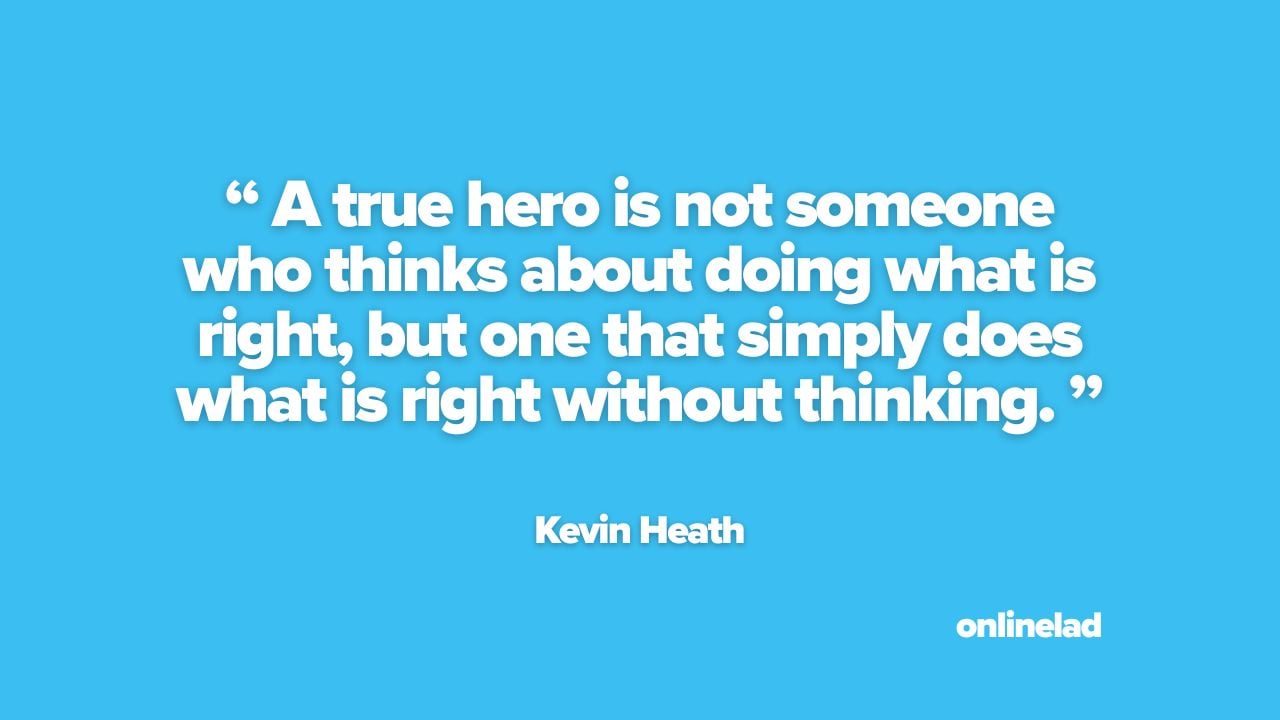
“A true hero is not someone who thinks about doing what is right, but one that simply does what is right without thinking!” — Kevin Heath.
There is something quietly powerful about this idea. In a world where we are constantly encouraged to analyse, optimise, and second-guess our decisions, the notion of acting without hesitation can feel almost radical. Yet this quote cuts through the noise with a simple truth: real character is revealed not in contemplation, but in action.
We live in an age of overthinking. From social interactions to career moves, many of us pause, weigh options, and worry about consequences before making even the smallest decisions. While reflection has its place, there is a deeper layer of integrity that operates beneath conscious thought. It is the part of us that already knows what is right.
This is where the quote resonates most. It speaks to a level of personal alignment where doing the right thing is not a debate, but a reflex. It is not about heroism in the grand, cinematic sense. It is about everyday moments: standing up for someone, telling the truth when it is uncomfortable, choosing honesty over convenience.
At onlinelad, we often explore what it means to live with confidence and purpose. This idea sits at the heart of both. Because when your values are truly embedded, you do not need time to calculate your response. You act. And in that moment, without fanfare or recognition, you become exactly what the quote describes — a quiet, authentic hero.
Quote in Context
Kevin Heath captures something timeless with this statement. While not tied to a specific historical event or widely documented speech, the sentiment echoes a long tradition of moral philosophy and human storytelling. Across cultures and generations, the idea of instinctive goodness has been celebrated as the highest form of character.
What makes this perspective so compelling is its simplicity. It removes the idea of heroism from dramatic, once-in-a-lifetime acts and places it firmly within reach of everyday people. It suggests that heroism is not about having time to reflect or plan. It is about being so aligned with your values that the right action becomes automatic.
This aligns closely with how we often perceive courage in real life. The person who steps in during a moment of injustice rarely pauses to analyse the situation in depth. They act because something within them demands it. That instinct is not accidental. It is built over time through habits, beliefs, and a clear sense of right and wrong.
In modern culture, where moral lines can sometimes feel blurred and decisions are influenced by external validation, this quote feels grounding. It reminds us that true integrity does not rely on applause or approval. It is internal, consistent, and often invisible.
By framing heroism as instinctive action, Heath shifts the focus away from recognition and onto character. It is not about being seen doing the right thing. It is about being the kind of person who cannot do otherwise.
Finding the Deeper Meaning
At its core, this quote challenges us to examine the relationship between thought and action. Many people believe that doing the right thing requires effort, discipline, or even sacrifice. While that can be true, the deeper message here is that the highest form of integrity transcends effort altogether.
When your values are fully integrated into who you are, doing the right thing stops feeling like a choice. It becomes part of your identity. This is where confidence and character intersect. Not the loud, performative kind of confidence, but a quieter, more grounded version rooted in self-trust.
In a practical sense, this means building habits that reinforce your principles. Every time you choose honesty over convenience or kindness over indifference, you are strengthening that internal compass. Over time, these decisions require less conscious thought. They become instinctive.
This idea also speaks to the pressures of modern life. Social media, peer expectations, and constant comparison can make it easy to second-guess what is right. We worry about how we will be perceived, whether we will be misunderstood, or if standing firm will come at a cost. In those moments, thinking too much can actually pull us away from our true values.
Heath’s words remind us that clarity comes from within, not from external validation. The more aligned you are with your principles, the less you need to pause and question yourself. You simply act.
Ultimately, this is not about perfection. It is about consistency. It is about becoming someone whose actions reflect their beliefs without hesitation. And in a world that often rewards noise over substance, that quiet consistency is one of the most powerful forms of strength a person can possess.
Relevance to Modern Life
In today’s world, doing the right thing is rarely as simple as it sounds. Not because the right path is unclear, but because so many competing voices try to influence our decisions. We are constantly exposed to opinions, expectations, and pressures that can blur what we instinctively know to be true. In that environment, hesitation becomes the norm.
Think about how this plays out in everyday life. In relationships, it might be the moment you know you should apologise, but pride gets in the way. At work, it could be speaking up when something feels off, even if it risks discomfort. In your personal life, it may be choosing discipline over distraction when no one else is watching. These are not dramatic, headline-worthy acts. They are quiet decisions that define your character over time.
The challenge is that modern life often rewards hesitation. We are encouraged to weigh outcomes, consider optics, and protect our own position. While that can be useful in certain contexts, it can also lead to a disconnect between what we believe and how we act. The longer that gap exists, the harder it becomes to trust ourselves.
This is where the quote becomes deeply relevant. It invites us to simplify. To move away from over-analysis and return to something more instinctive. Not reckless action, but aligned action. The kind that comes from knowing who you are and what you stand for.
There is also a quiet confidence in this approach. When you act without overthinking, you are not seeking permission or validation. You are operating from a place of internal clarity. That clarity is rare, and it is often what sets people apart, not in a loud or obvious way, but in how consistently they show up.
In a culture that often values performance over substance, this way of living feels grounding. It reminds us that integrity is not something you switch on when it suits you. It is something you carry with you, moment by moment, decision by decision, until it becomes second nature.
Applying the Message Personally
There are moments in all of our lives where we know exactly what the right thing is, yet we hesitate. Not because we are unsure, but because we are weighing the consequences. We wonder how it will be received, whether it will create tension, or if it will cost us something in the short term. That pause is human, but it is also where many people lose alignment with themselves.
Applying this message does not require a complete overhaul of your life. It starts with noticing those moments of hesitation. The quiet internal signal that tells you what you should do, before your mind begins to negotiate with it. That signal is often subtle, but it is consistent. The more you pay attention to it, the clearer it becomes.
Personal growth, in this context, is less about learning new behaviours and more about trusting what you already know. It is about reducing the gap between instinct and action. That might mean having a difficult conversation you have been avoiding, setting a boundary that feels overdue, or choosing to follow through on something you committed to, even when it would be easier not to.
What makes this powerful is its simplicity. You do not need perfect clarity in every area of your life. You only need to act on the moments that are already clear. Over time, those small decisions compound. They shape your identity, reinforce your confidence, and make future decisions easier.
If there is one takeaway to carry into this week, it is this: when you notice yourself hesitating over something you know is right, act within a few seconds. Do not give doubt time to grow. Trust that initial instinct and follow it through. It does not need to be dramatic. It just needs to be honest.
Because each time you do, you are not just making a decision. You are reinforcing the kind of person you are becoming.
Conclusion: Where Character Speaks Without Words
At its heart, Kevin Heath’s quote is not about heroism in the traditional sense. It is about alignment. The kind that exists when your actions reflect your values so naturally that there is no need for deliberation. It is quiet, often unnoticed, and yet incredibly powerful.
In a world that encourages constant reflection and second-guessing, there is something refreshing about this idea. It brings us back to a simpler truth. That who you are is revealed in what you do, especially in the moments when no one is watching and there is no time to prepare.
What makes this perspective so compelling is that it is accessible. You do not need a defining moment or a grand opportunity to live it out. It is present in the small, everyday choices that shape your life. The way you treat people, the standards you hold yourself to, and the decisions you make when it would be easier to look the other way.
Over time, these moments build something far more meaningful than recognition. They build trust in yourself. A quiet certainty that you will act in line with what you believe, regardless of circumstance. That kind of self-trust is where real confidence comes from.
“A true hero is not someone who thinks about doing what is right, but one that simply does what is right without thinking.” It is not a call to be perfect. It is a reminder to be consistent. To close the gap between knowing and doing, until there is no gap at all.
If this way of thinking resonates with you, you can join onlinelad and continue exploring ideas like this in a deeper, more meaningful way. Not as a pursuit of perfection, but as a steady move towards becoming someone who lives with clarity, purpose, and quiet confidence.