
Introduction: A Quiet Duty That Defines Us
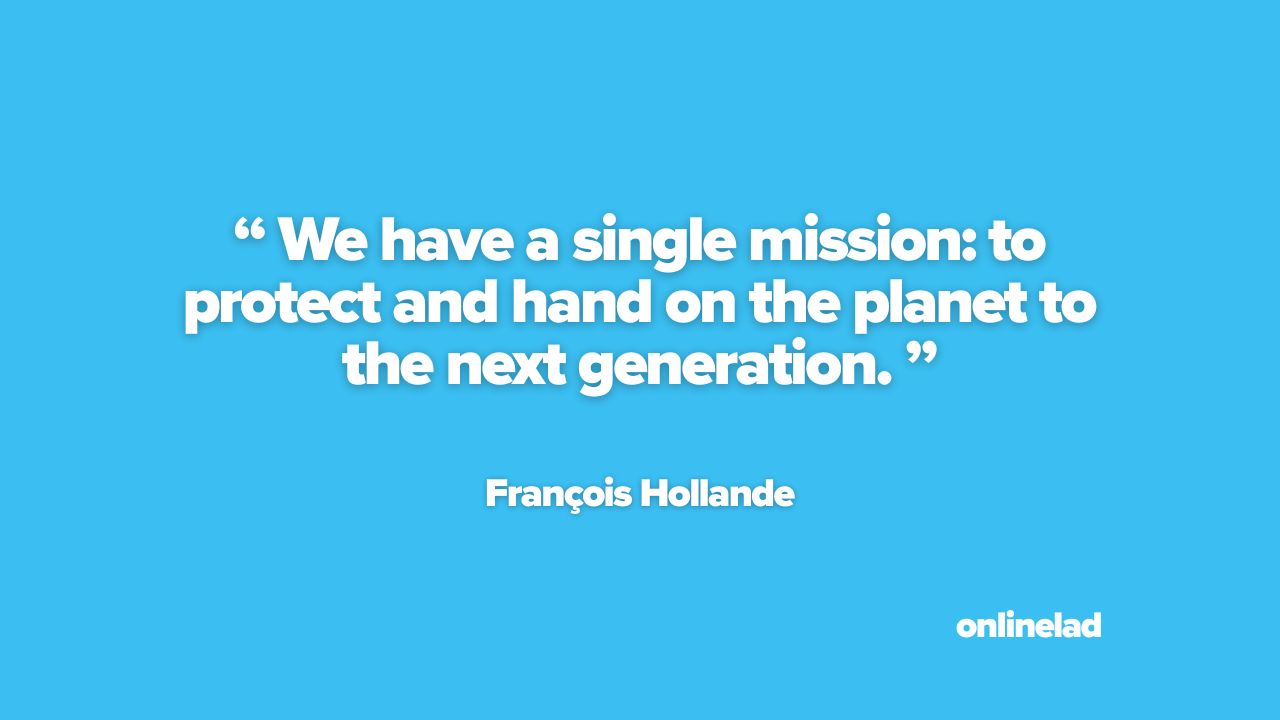
“We have a single mission: to protect and hand on the planet to the next generation.” These words, spoken by François Hollande, cut through the noise of modern life with unusual clarity. In a world often distracted by short-term gains and immediate gratification, this quote reframes our existence into something far more enduring. It reminds us that our time here is not ownership, but stewardship.
Environmental responsibility is often discussed in sweeping global terms, yet this message brings it back to something deeply human. It is not just about policies or protests. It is about the quiet, consistent choices we make every day, and the legacy those choices leave behind.
Quote in Context
François Hollande, former President of France, spoke these words during a time when global attention was increasingly focused on climate change and sustainability. His presidency coincided with the landmark Paris Agreement, a defining moment in international environmental cooperation.
This quote reflects not just political ambition, but a broader philosophical stance. It positions environmental protection as a shared mission rather than a fragmented debate. It moves beyond ideology and speaks to continuity, the idea that each generation holds the planet in trust for the next.
Finding the Deeper Meaning
At its core, this quote is about responsibility that extends beyond the self. It challenges the modern tendency to prioritise convenience over consequence. The phrase “a single mission” is particularly striking. It simplifies what can often feel like an overwhelming issue, suggesting that beneath all complexity lies one clear directive: preserve what sustains life.
There is also an implicit humility in these words. To “hand on” the planet suggests that it does not belong to us in the first place. We are temporary custodians, not permanent owners. This perspective reshapes how we think about consumption, waste, and progress. It invites a quieter, more deliberate way of living.
Relevance to Modern Life
Today, the pressures of modern life often push long-term thinking aside. Careers demand urgency, technology accelerates decision-making, and convenience is constantly prioritised. In this environment, environmental responsibility can feel distant or abstract.
Yet its relevance has never been more immediate. From rising living costs linked to resource scarcity to the visible effects of climate change on weather and food systems, the impact is already here. This quote serves as a grounding point, reminding us that sustainability is not a separate concern. It is woven into the quality and stability of everyday life.
More importantly, it reframes environmental action as something personal. It is not reserved for governments or activists. It exists in how we travel, what we buy, how we consume, and what we choose to ignore.
Applying the Message Personally
The strength of this quote lies in its simplicity, and that simplicity makes it actionable. You do not need to transform your life overnight to honour this mission. What matters is consistency and awareness.
A practical takeaway for the week is this: choose one area of your daily routine where you can reduce waste or consumption. It might be as straightforward as cutting down single-use plastics, reducing energy usage at home, or being more intentional with food purchases. The key is to make the choice consciously, rather than out of habit.
Small actions, when repeated over time, shape both personal identity and collective impact. They turn an abstract mission into a lived reality.
Conclusion: The Legacy We Leave Behind
François Hollande’s words are not dramatic, yet they carry a quiet weight that lingers. They remind us that the measure of a generation is not just what it achieves, but what it preserves.
To protect and hand on the planet is not a burden. It is a form of respect, for both the past that shaped it and the future that depends on it. In recognising this, we begin to live with greater intention, not just for ourselves, but for something far beyond us.
For more thoughtful reflections like this, visit onlinelad, and if you want to stay connected with grounded, meaningful insights, you can join onlinelad.