
Introduction: The Difference Between Time and Spirit
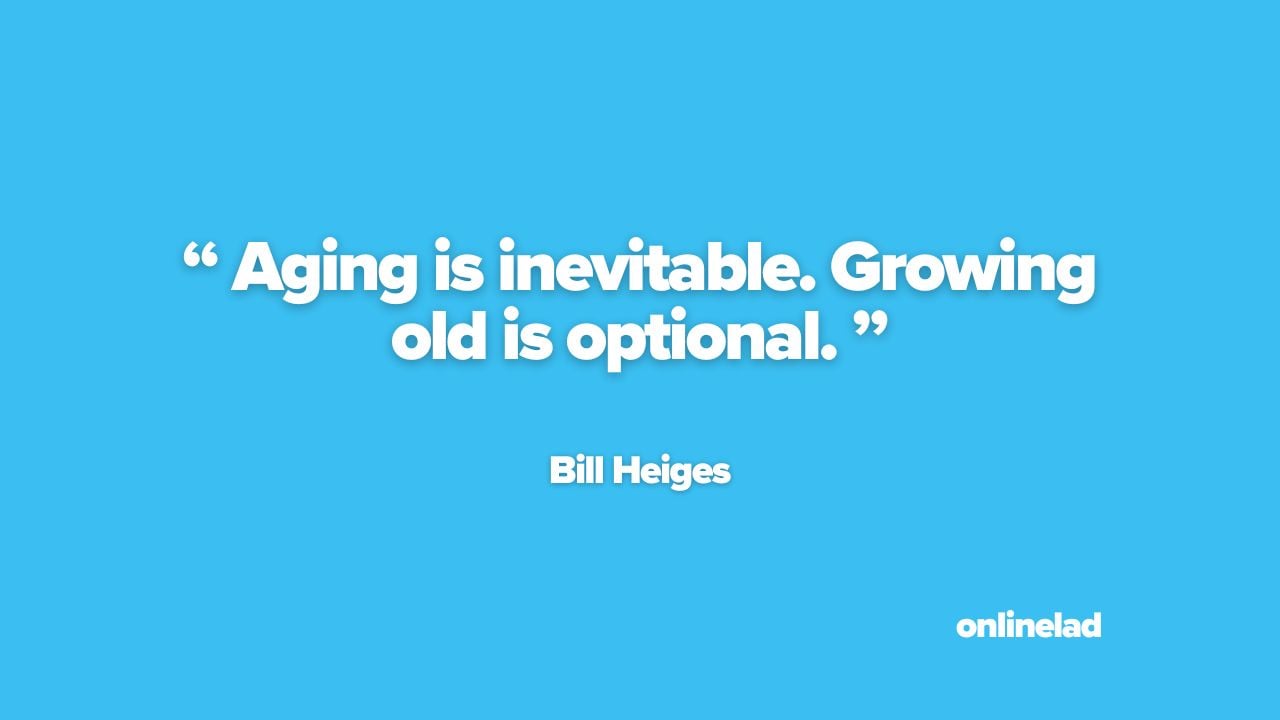
“Aging is inevitable. Growing old is optional.” This concise quote, attributed to Bill Heiges, draws a clear line between the passage of time and the condition of the human spirit. It accepts one truth without surrendering to another. The body changes. Years gather. Responsibilities shift. Yet the deeper question is not simply how long we live, but how awake, curious, disciplined, and emotionally alive we remain while living.
The quote resonates today because modern life often treats ageing as decline rather than transition. People are encouraged to fear wrinkles, milestones, slower seasons, and changing identities. Yet Heiges’ words suggest something more dignified. Ageing is biological. Growing old, in the defeated sense, is psychological. It happens when people stop questioning, stop learning, stop taking care of themselves, and stop believing that their presence still matters.
At onlinelad, this kind of message sits close to the heart of personal growth. It is not about pretending to be young forever. It is about refusing to let time make your decisions for you. The years may be unavoidable, but resignation is not.
Quote in Context
Bill Heiges’ quote matters because it speaks with the simplicity of lived wisdom. It does not attempt to deny age, nor does it dress the subject in empty optimism. Instead, it recognises that there is a difference between accepting reality and becoming passive within it. That distinction is powerful.
Ageing is one of the few experiences every person shares. It cuts across status, background, ambition, beauty, wealth, and success. No one negotiates with time. Yet people respond to time in profoundly different ways. Some become narrower as the years pass. Others become deeper. Some become bitter. Others become more generous, more discerning, and more at peace with themselves.
The quote invites us to see growing old not as a birthday, but as an attitude. It is the moment a person stops participating fully in their own life. It can happen at twenty-five just as easily as seventy-five. It can show up as cynicism, laziness, fear, emotional rigidity, or the quiet belief that the best parts of life are already behind us.
That is why the message carries weight. It reframes age from something to fear into something to meet with character. The body may move through time, but the mind and spirit still require maintenance. Curiosity, humour, discipline, connection, and courage are choices that can remain available long after youth has passed.
Finding the Deeper Meaning
At its deepest level, this quote is about identity. It asks whether we define ourselves by what time takes away, or by what experience helps us become. Ageing changes the surface of life. It alters energy, appearance, priorities, and perspective. But growing old in spirit often begins when a person hands over their inner authority to fear.
There is a quiet discipline in refusing that surrender. It takes effort to remain open. It takes confidence to keep learning when you are no longer the youngest voice in the room. It takes self-respect to care for your health, your relationships, and your emotional world without being driven by vanity or comparison.
The quote also speaks to resilience. Life will bruise everyone eventually. Disappointment, grief, rejection, and regret can harden people if they are left unexamined. Growing old, in this sense, can mean allowing pain to become personality. But maturity offers another path. It allows pain to become wisdom, boundaries, compassion, and clearer judgement.
Heiges’ words remind us that youthfulness is not only a matter of age. It can be seen in someone’s willingness to adapt, to laugh, to listen, to begin again, and to remain interested in life. The deeper meaning is not that we should chase the past. It is that we should refuse to let the past close us down.
Relevance to Modern Life
In modern life, the pressure around ageing is intense. People are surrounded by images of youth, speed, constant reinvention, and visible success. Workplaces often reward energy over wisdom. Social media rewards appearance over depth. Relationships can become shaped by comparison, insecurity, and the fear of becoming less desirable or less relevant.
This makes the quote especially useful. It reminds us that relevance is not only external. A person remains relevant when they remain engaged. That might mean learning new skills, staying physically active, communicating honestly, building better habits, or choosing not to withdraw from life simply because it has changed shape.
There is also a relationship lesson here. People often grow old emotionally when they become too proud to apologise, too guarded to be vulnerable, or too tired to make effort. Love, friendship, and family all require a living spirit. They require attention. They require the courage to keep showing up.
In work and ambition, the same principle applies. Ageing may alter the pace, but it does not remove the need for purpose. Many people rediscover ambition later in life because they finally know what matters. They are less distracted by approval and more committed to meaning. The quote challenges the idea that growth belongs only to the young. Growth belongs to anyone still willing to take responsibility for their life.
Applying the Message Personally
To apply this quote personally, begin by separating facts from stories. The fact may be that you are older than you were ten years ago. The story might be that it is too late, that your best days are gone, or that change is no longer possible. One is reality. The other may be fear speaking in a convincing voice.
A practical response is to look at the areas where you have quietly stopped participating. Have you stopped moving your body with care? Have you stopped learning? Have you stopped making plans? Have you stopped expressing affection, taking risks, or setting standards for yourself? These are often the places where people begin to grow old before their time.
The aim is not to become restless or dissatisfied. It is to remain alive to possibility. This can be done through small, repeatable acts: reading something challenging, walking daily, calling someone you value, improving your sleep, setting one meaningful goal, or letting go of a belief that has made you smaller.
Weekly takeaway: choose one area of your life where you have been acting as though it is already finished, and give it one honest act of renewed effort this week.
Doubt will appear. Overthinking will argue. Hesitation will ask for proof before you begin. But the proof often comes after action, not before it. You do not stay young in spirit by avoiding change. You stay young in spirit by meeting change with courage.
Conclusion: Refusing to Let Time Decide Everything
“Aging is inevitable. Growing old is optional.” The strength of this quote lies in its restraint. It does not deny the truth of time. It simply refuses to let time become the whole truth.
Ageing will happen to every person. The body will change, the seasons will move, and life will ask us to release certain versions of ourselves. But growing old in the deeper sense is not forced upon us in the same way. It happens when we abandon curiosity, courage, discipline, humour, connection, and self-respect.
The more meaningful path is not to chase youth, but to remain fully involved in life. To become wiser without becoming closed. To become calmer without becoming passive. To become older without becoming absent from your own story.
That is the quiet challenge inside Heiges’ words. Time may count the years, but it does not have to define the spirit. For more grounded reflections on confidence, discipline, ambition, and personal growth, join onlinelad.