
Introduction: The Comforting Myth of Somewhere Else
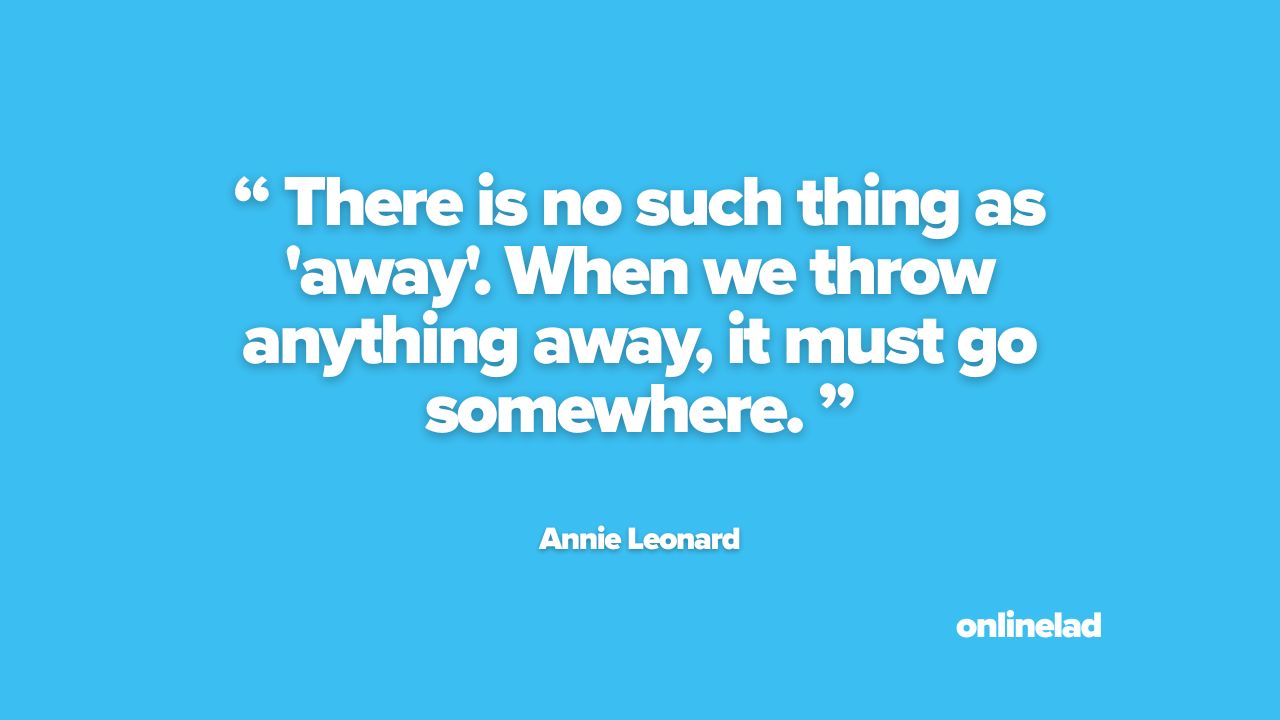
“There is no such thing as ‘away’. When we throw anything away, it must go somewhere.” Annie Leonard’s observation is simple enough to understand in a moment, yet difficult to forget once its meaning settles in. On the surface, it is a statement about rubbish, consumption and the physical consequences of what we discard. Beneath that surface lies a broader truth about responsibility. The things we remove from sight do not necessarily cease to exist. They often continue elsewhere, affecting people, places and systems beyond our immediate awareness.
This is why the quote feels so relevant today. Modern life is built around convenience. We can replace an object with a click, avoid an uncomfortable conversation with silence, or move past a mistake without properly examining it. Distance creates the impression that a problem has been solved. Leonard reminds us that distance and resolution are not the same thing. What disappears from our view may simply have entered somebody else’s world.
For readers interested in confidence, discipline and personal growth, the message reaches beyond environmental responsibility. It asks whether we are facing the consequences of our choices or merely moving them out of sight. That question belongs naturally within the reflective conversations found at onlinelad, where meaningful growth begins not with perfection, but with honest attention.
Quote in Context
Annie Leonard is an environmental campaigner, writer and the founder of The Story of Stuff Project. Her work has concentrated on the journey of material goods, from the extraction of natural resources to production, purchase, use and eventual disposal. The project’s original short film, released in 2007, challenged viewers to look beyond the polished experience of buying something and consider the less visible systems behind it.
Leonard’s quote belongs within that examination of consumer culture. The household bin can create a powerful illusion. Once an unwanted object has been collected, it appears to have vanished. In reality, it may be buried, burned, processed, exported, broken apart or left in an environment where its effects continue for years. The language of throwing something “away” allows us to imagine a destination that has no geography and no human consequences. Leonard removes that illusion with one direct sentence: it must go somewhere.
This is what gives the quote the authority of lived wisdom. It does not sound like an abstract theory developed at a comfortable distance. It reflects years spent examining how consumption and disposal affect communities, workers and ecosystems. Leonard is asking people to notice the complete story of the objects around them, rather than paying attention only to the convenient chapter in which those objects serve their immediate needs.
Among the thought-provoking quotes selected by onlinelad, this one stands out because it turns an ordinary phrase into a moral question. What do we mean by “away”, and who lives there?
Finding the Deeper Meaning
The deeper meaning of Leonard’s words rests in the difference between removing something and resolving it. Human beings are skilled at creating psychological distance. We place unwanted objects in bins, difficult emotions behind humour and uncomfortable memories beneath distraction. When something is no longer directly visible, we can begin to behave as though it no longer matters.
Yet consequences do not depend on whether we are watching them. A careless comment may remain with another person long after we have forgotten saying it. An avoided decision can quietly restrict our future options. An unhealthy pattern can be carried from one relationship into the next. Like physical waste, unresolved experiences do not disappear simply because they have left the centre of our attention. They go somewhere, often becoming part of the emotional environment in which we continue to live.
This is where the quote connects with identity and confidence. Genuine confidence is not the ability to avoid discomfort. It is the capacity to face what our choices create. A confident person can acknowledge an error without allowing it to define their entire character. A disciplined person can recognise the cost of a habit and begin changing it before the consequences become more difficult to manage.
Responsibility is sometimes misunderstood as self-punishment. In reality, it is a form of personal authority. When we accept that our actions go somewhere, we stop pretending that life is happening independently of us. We become more deliberate about what we buy, what we say, what we tolerate and what we repeatedly postpone. Leonard’s environmental insight therefore becomes a philosophy of character: nothing is truly separate from the system it enters.
Relevance to Modern Life
Modern culture makes it remarkably easy to lose sight of consequences. Products arrive quickly, often with little indication of who made them, what resources were required or where the packaging will end up. Digital platforms allow words to travel instantly while separating the speaker from the emotional response they create. Workplaces can celebrate short-term performance without acknowledging exhaustion, strained relationships or declining health.
The same pattern appears in personal life. Someone may avoid a difficult conversation to preserve temporary peace, only to discover that the unspoken tension has moved into resentment. Another person may continually postpone rest, believing that tiredness can be dealt with after the next deadline. The immediate problem seems to have been thrown “away”, but it has simply changed form. It may return as distance, anxiety, poor judgement or a loss of motivation.
Leonard’s quote invites us to examine the hidden destination of our choices. Where does constant comparison go? It may enter our self-image. Where does neglected frustration go? It may enter our closest relationships. Where does unnecessary consumption go? It may enter a landfill, a community, an ocean or a financial statement we would rather not inspect.
This does not mean that every decision should become a source of guilt. That would make thoughtful living almost impossible. The better response is awareness joined with proportion. We can ask more honest questions before acting. Do I need this? Am I avoiding something? Who carries the cost of this convenience? What will this decision create next?
Such questions do not remove all uncertainty, but they strengthen self-direction. They bring the distant consequence back into view while there is still time to choose differently.
Applying the Message Personally
Applying Leonard’s message begins with observing where the word “away” appears in your own thinking. You may not use the word literally. Instead, it can sound like “I’ll deal with it later”, “It probably does not matter”, or “Once I leave, it will no longer be my problem”. These phrases can sometimes be reasonable, but they can also conceal avoidance.
Choose one area of your life where a consequence has been moved out of sight. It might involve spending, clutter, health, work or a relationship. Rather than trying to repair everything at once, follow the path of one repeated choice. Notice what happens before it, what immediate comfort it provides and where its longer-term effects appear. This turns a vague feeling of dissatisfaction into something observable.
If doubt or overthinking appears, remember that responsibility does not require a perfect solution. It requires the next honest action. You might repair an item rather than replace it, apologise for a remark rather than defend it, organise a neglected space or finally make the appointment you have been postponing. A modest action completed with awareness is more valuable than an ambitious intention that remains untouched.
It is also worth noticing what you bring into your life, not only what you remove. Every purchase, commitment and relationship requires some form of space, attention or maintenance. Being selective is not cold or restrictive. It is a way of respecting your limited resources.
This week’s takeaway: select one thing you would usually throw away, ignore or postpone. Trace where it would actually go, then take one practical step that reduces the future cost. The purpose is not to become flawless. It is to make one consequence visible and respond to it deliberately.
Conclusion: Living Without the Illusion of Away
Annie Leonard’s words endure because they expose a comforting fiction. “Away” sounds like an empty place beyond responsibility, yet no such place exists. Objects remain within physical systems. Words remain within people. Habits remain within character. Decisions continue shaping circumstances after the moment of choosing has passed.
Recognising this can feel confronting, but it is ultimately empowering. When consequences are visible, choice becomes more meaningful. We can consume with greater care, speak with greater awareness and deal with problems before distance makes them harder to reach. We can stop confusing avoidance with peace and convenience with completion.
The quote does not demand that we carry the entire weight of the world. It asks us to acknowledge our place within it. That means accepting that our actions travel, while remembering that better actions travel too. Care, restraint, repair and honesty also go somewhere. They enter homes, workplaces, relationships and communities, often influencing more than we can immediately see.
A responsible life is not defined by never creating waste, difficulty or regret. It is defined by the willingness to remain present to what we create. To continue exploring thoughtful ideas about confidence, purpose and personal responsibility, join onlinelad.