
Introduction: The Grace That Completes Generosity
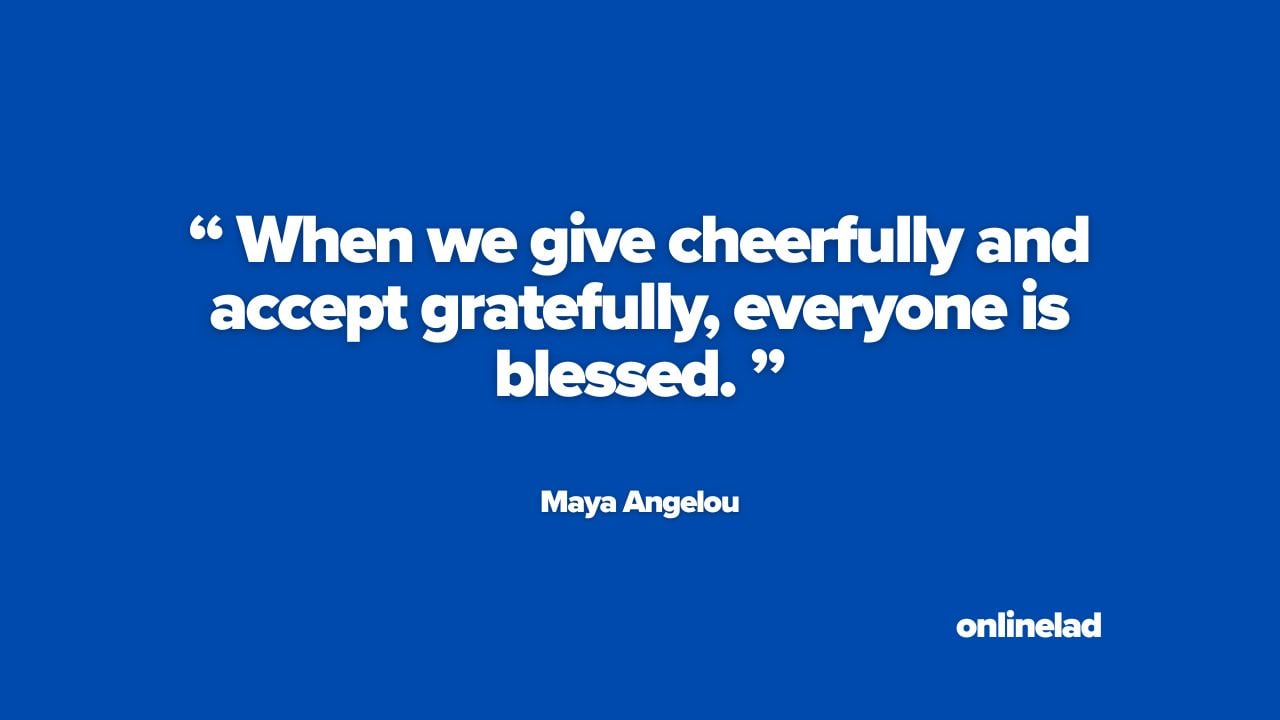
Generosity is often described as the simple act of giving, but its emotional power depends on more than what changes hands. It also depends on the spirit in which something is offered and the openness with which it is received. Maya Angelou captured this balance beautifully when she said, “When we give cheerfully and accept gratefully, everyone is blessed.”
The quote feels gentle, yet it contains a demanding truth. Giving without warmth can feel like duty, performance or control. Receiving without gratitude can make even a sincere gesture seem unnoticed. Angelou reminds us that generosity becomes meaningful when both people participate with dignity. One person offers freely, while the other allows the gift to matter.
This idea resonates today because many of us struggle with both sides of the exchange. We may give while quietly expecting recognition, or refuse help because accepting it makes us feel vulnerable. We want to appear independent, capable and unaffected, even when support would make life lighter.
At onlinelad, personal growth is not treated as a performance of constant strength. Sometimes growth means contributing without keeping score. At other times, it means receiving kindness without embarrassment. Angelou’s words invite us to reconsider generosity as a shared experience, one that can strengthen confidence, deepen relationships and restore a sense of connection.
Quote in Context
Maya Angelou was a poet, memoirist, performer and civil rights activist whose work explored dignity, identity, courage and the human need to be seen. Her writing carried the authority of lived experience. She understood hardship, exclusion and loss, but she also understood humour, tenderness and the ways people help one another endure.
That broader perspective gives this quote its weight. Angelou was not presenting generosity as a polished social custom. She was describing a human exchange in which attitude matters as much as action. The word “cheerfully” suggests that genuine giving should not burden the recipient with guilt. The word “gratefully” suggests that receiving is not passive. It acknowledges the care, effort or sacrifice behind what has been offered.
This is why Angelou’s observation belongs among the thought-provoking quotes selected by Onlinelad that continue to offer practical guidance. It does not merely praise kindness. It explains how kindness can succeed or fail depending on the emotional conditions surrounding it.
A gift given resentfully can create discomfort. Help offered to establish superiority can weaken trust. In the same way, a thoughtful gesture dismissed without appreciation can leave the giver feeling foolish or unseen. Angelou’s wisdom restores balance. The giver is responsible for generosity without manipulation, while the receiver is responsible for acknowledging what has been given.
Seen this way, the quote is less about manners and more about mutual respect. It asks both people to remain present, sincere and free from unnecessary pride.
Finding the Deeper Meaning
At its deepest level, this quote challenges the belief that strength belongs only to the person who gives. Giving is often associated with abundance, confidence and control. Receiving can feel more uncertain because it requires us to admit that another person has something valuable to offer us. That admission can touch pride, insecurity and old fears about dependence.
Yet accepting gratefully is not weakness. It is a form of emotional confidence. It allows us to recognise kindness without questioning whether we deserve it, searching for hidden motives or immediately planning how to repay the debt. Gratitude lets a generous act remain generous.
The quote also speaks to identity. Some people build their sense of worth around being useful to others. They give advice, time, money, attention and emotional support, but become uncomfortable when care is directed towards them. Their generosity may be sincere, but their inability to receive can quietly create distance. Relationships become one-sided, even when nobody intended them to be.
Angelou’s words suggest that healthy connection requires movement in both directions. We need the discipline to give without resentment and the self-worth to receive without shame. Both acts require trust.
There is also a lesson in resilience. During difficult periods, we may not have the energy, resources or certainty we once had. Accepting help can allow us to recover rather than merely survive. At another point, we may become the person able to support someone else. Life changes our position repeatedly.
The blessing Angelou describes is therefore not sentimental. It is the shared dignity created when generosity is offered freely and welcomed honestly. Nobody is diminished. Both people leave the exchange more connected than before.
Relevance to Modern Life
Modern life encourages independence, but it can easily turn independence into isolation. Professional culture rewards people who appear self-sufficient. Social media celebrates visible success while hiding the support, encouragement and second chances behind it. Many people learn to present themselves as though they require nothing from anyone.
This creates an uncomfortable contradiction. We want meaningful relationships, yet we resist the vulnerability those relationships require. We may happily help a colleague but struggle to ask for guidance ourselves. We may support a friend through a difficult period but minimise our own problems when they offer to listen. We may give thoughtful compliments, then dismiss the compliments we receive.
Angelou’s quote interrupts this pattern. It reminds us that rejecting kindness does not always demonstrate humility. Sometimes it prevents another person from expressing care. A sincere “thank you” can be more generous than deflection because it allows the giver to know that their gesture reached us.
The same principle applies at work. A leader who gives recognition cheerfully strengthens trust. An employee who receives praise gratefully, rather than undermining their contribution, shows quiet confidence. In relationships, giving time without keeping score and receiving affection without suspicion can make intimacy feel safer.
There are boundaries, of course. Cheerful giving does not mean abandoning our needs, tolerating exploitation or saying yes to every request. Grateful acceptance does not mean owing unlimited loyalty to someone who helped us. Healthy generosity remains voluntary. It respects the freedom of both people.
In a culture that often turns every interaction into a transaction, Angelou offers a different model. Give because you genuinely wish to contribute. Receive because another person’s care deserves room to land. That simple shift can transform ordinary exchanges into moments of real connection.
Applying the Message Personally
Applying this message begins with noticing the emotions attached to giving and receiving. Before offering help, ask yourself whether you can give it freely. If resentment is already present, a respectful boundary may be more honest than reluctant generosity. A cheerful gift does not need to be dramatic. It needs to be sincere.
This could mean giving someone your full attention rather than offering distracted advice. It might mean sharing knowledge with a colleague without needing to prove your superiority. It could involve helping a friend while resisting the temptation to remind them of the favour later.
Receiving requires a different kind of awareness. Notice what happens when someone compliments you, supports you or offers practical help. Do you immediately reject it? Do you explain why you do not deserve it? Do you become anxious about repayment? These reactions are often driven by overthinking rather than gratitude.
Try replacing automatic resistance with a simple response: “Thank you. That means a great deal.” You do not need to reduce yourself to honour another person’s kindness. You only need to acknowledge what was offered.
For people who hesitate to ask for help, begin with something small and specific. Request an opinion, accept a lift or allow someone to take responsibility for one task. Confidence is not the refusal of support. It is the ability to recognise what you need without believing that need makes you less capable.
Weekly takeaway
During the next seven days, choose one opportunity to give without expecting recognition and one opportunity to receive without deflecting. Pay attention to how each exchange feels. The aim is not to perform generosity perfectly. It is to practise openness on both sides.
Over time, this balance can soften pride, reduce resentment and create relationships in which care is allowed to move naturally.
Conclusion: Let Kindness Move in Both Directions
“When we give cheerfully and accept gratefully, everyone is blessed” is more than a reminder to be generous. It is an invitation to participate fully in the exchange of care.
Maya Angelou understood that kindness loses some of its meaning when it is given with bitterness, control or expectation. She also understood that receiving matters. Gratitude completes the gesture by recognising the humanity behind it.
We will not always occupy the same position. At times, we will have the strength, knowledge or resources to give. At other times, we will need encouragement, patience or practical support. Neither position defines our worth. What matters is the dignity we bring to the moment.
Give where you can do so honestly. Set boundaries where generosity would become resentment. When sincere help reaches you, allow yourself to accept it without apology. A graceful thank you may be all that is required.
The healthiest relationships are not built by people who never need one another. They are built by people who can contribute without control and receive without shame. Angelou’s words remind us that generosity is not a one-person act. It becomes complete when kindness is offered freely, welcomed openly and allowed to strengthen everyone involved.
For more grounded reflections on confidence, relationships and personal growth, join onlinelad.