

Introduction: Beyond Being Heard
Modern life has made communication almost effortless. We can send a message across the world in seconds, share an opinion with thousands of people and remain available to colleagues, friends and family throughout the day. Yet being surrounded by communication does not necessarily protect us from feeling unseen.
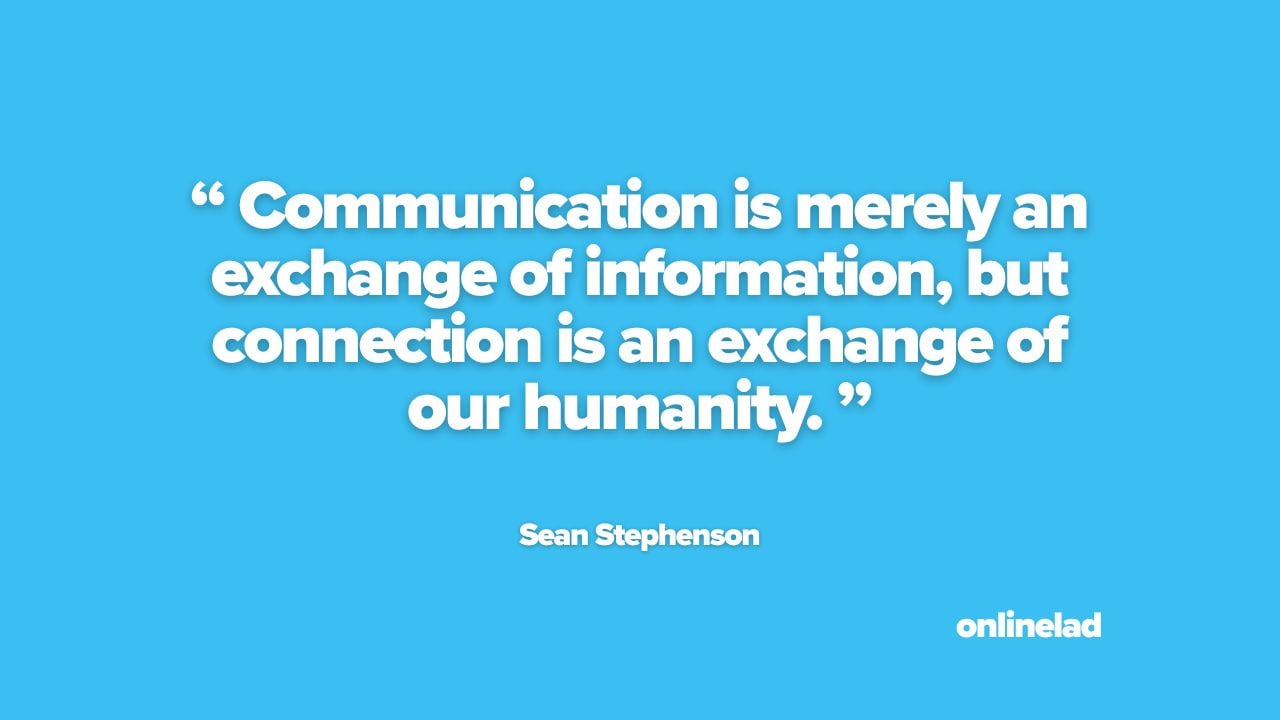
Sean Stephenson captured this distinction with unusual clarity: “Communication is merely an exchange of information, but connection is an exchange of our humanity.” His words remind us that transmitting facts and creating understanding are not the same thing. Information can pass between two people without either person feeling recognised. Connection asks for something more personal: attention, honesty, empathy and the willingness to be affected by another human being.
This matters because many of our most important struggles are not caused by a lack of words. They come from the feeling that our words have not truly landed. We explain ourselves repeatedly, but still feel misunderstood. We remain in contact, but experience little closeness. We speak efficiently, but rarely reveal what is actually happening beneath the surface.
At onlinelad, the distinction between appearance and substance sits at the heart of personal growth. Stephenson’s quote invites us to examine not only how often we communicate, but how fully we allow ourselves to connect.
Quote in Context
Sean Stephenson was an American therapist, author and speaker whose public work explored confidence, insecurity, personal responsibility and the stories people tell themselves about their limitations. He lived with osteogenesis imperfecta, a rare condition that made his bones extremely fragile, and spent much of his life confronting assumptions about his body, abilities and identity.
That background does not make every statement he offered automatically profound. It does, however, give this particular observation a sense of lived authority. Stephenson understood that people can look at another person, collect visible information and still fail to encounter who that person really is. Facts may describe a life without revealing its emotional reality.
His distinction between communication and connection is therefore more than a clever contrast. It reflects a broader understanding of human dignity. Communication can remain controlled and impersonal. We can report what happened, give instructions, state our position or produce the correct response. Connection begins when we allow another person to see something real and make space for their reality in return.
This is why the quote belongs among the motivational quotes selected by onlinelad that deserve more than a quick glance. It is not simply advice about speaking more warmly. It asks us to consider the quality of our presence.
The line also resists the idea that communication skill is purely technical. Clear language matters, but perfect wording cannot replace sincerity. A polished message may inform someone, while an imperfect but honest conversation can change the relationship between two people. Stephenson’s wisdom lies in recognising that the deepest exchange is not always found in what is said. It is found in what each person is willing to bring into the moment.
Finding the Deeper Meaning
At its deepest level, this quote is about the difference between exposure and vulnerability. Communication exposes information. Connection reveals something of the person carrying it.
We can communicate without taking much emotional risk. We can discuss schedules, responsibilities, problems and plans while carefully protecting our uncertainty, affection, disappointment or fear. This is often necessary. Not every conversation requires emotional depth, and healthy boundaries matter. The problem begins when efficiency becomes our only way of relating.
Connection requires the courage to be present without hiding behind performance. It may mean admitting that we do not have an answer, listening without planning a defence or expressing appreciation before the opportunity passes. These actions seem small, but they challenge the part of us that wants to remain protected and in control.
The quote also speaks to identity. Many people learn to present a version of themselves designed to secure approval. They become agreeable, impressive, useful or emotionally undemanding. This can produce successful communication because others receive what they expect. Yet it may prevent genuine connection because the person underneath the role remains concealed.
Resilience is often understood as the ability to withstand pressure alone. Human connection offers a more mature interpretation. Strength also involves knowing when to let another person understand what we are carrying. Confidence is not the absence of need. It is the ability to acknowledge our needs without allowing shame to define them.
Discipline plays a role too. Meaningful connection is not created by occasional emotional intensity. It is built through repeated acts of attention: remembering what matters to someone, asking a second question, keeping a confidence and returning to difficult conversations with greater honesty. Humanity becomes visible through consistent behaviour.
Stephenson’s message therefore asks for both openness and responsibility. Connection is not emotional display for its own sake. It is the deliberate meeting of two realities, each treated as worthy of care.
Relevance to Modern Life
The distinction between communication and connection has become sharper in a culture built around speed. Messages are shortened, meetings are compressed and conversations compete with constant notifications. We often respond quickly because responsiveness is visible, while thoughtful attention is harder to measure.
At work, this can create teams that exchange information efficiently but understand one another poorly. A manager may distribute clear instructions without recognising exhaustion or uncertainty. An employee may provide regular updates while quietly losing confidence. The facts move through the organisation, yet the human experience remains hidden.
Leadership changes when communication becomes connection. It does not require turning every professional exchange into a personal confession. It means noticing how information affects people, inviting honest responses and creating enough psychological safety for concerns to be expressed before they become crises. People are more likely to trust direction when they believe the person giving it can also hear them.
The same pattern appears in relationships. Couples may discuss household responsibilities, finances and weekend plans while avoiding the loneliness growing between them. Friends may exchange memes and updates without asking how life actually feels. Families may remain constantly connected through technology while carrying years of unspoken tension.
Social media intensifies the contradiction. It gives us unprecedented access to other people’s words, images and opinions, but access is not intimacy. We may know what someone ate, bought or achieved without knowing what they fear, value or need. Visibility can imitate closeness while preserving emotional distance.
This quote is also relevant to the relationship we have with ourselves. Many people communicate internally through commands and criticism: work harder, stop worrying, be better, move on. Connection with oneself sounds different. It asks what the worry is protecting, what the exhaustion is signalling and what truth has been avoided.
Modern life does not suffer from a shortage of information. It suffers when information becomes a substitute for attention. Stephenson’s words remind us that no platform, process or communication technique can remove the need to meet one another as human beings.
Applying the Message Personally
Applying this message begins with noticing the moments when you are speaking without truly participating. You may be giving the expected answer, explaining too much or waiting for the other person to finish so that you can defend your position. None of this makes you uncaring. It usually means that protection has become more important than understanding.
A useful first step is to slow one conversation down. Choose someone who matters and listen for what sits beneath the information. A complaint may contain disappointment. A practical question may conceal anxiety. Silence may indicate uncertainty rather than indifference. You do not need to analyse the person or force emotional depth. Simply allow the possibility that the words are carrying more than their literal meaning.
You can also make your own communication more human by replacing performance with precision. Instead of saying that everything is fine, name the part that is difficult. Instead of expecting someone to recognise your effort, tell them why their acknowledgement matters. Instead of withdrawing when you feel misunderstood, explain what you hoped they would hear.
Doubt and overthinking often appear at this point. You may worry about saying the wrong thing, appearing needy or creating discomfort. The search for perfect wording can become another form of avoidance. Connection rarely depends on delivering a flawless sentence. It depends on offering something sincere enough for another person to respond to.
Boundaries remain essential. Exchanging humanity does not mean giving everyone access to your private life. Healthy connection is selective, mutual and respectful. You can be honest without becoming exposed, compassionate without accepting harmful behaviour and available without abandoning your own needs.
Your weekly takeaway
Once each day this week, turn one routine exchange into a more attentive conversation. Put the phone down, ask one genuine follow-up question and listen without immediately relating the answer back to yourself. At the end of the week, notice which conversations felt different and why.
The goal is not to become more socially impressive. It is to become more present. Small moments of undivided attention can restore trust, soften defensiveness and remind people that they are more than the information they provide.
Conclusion: Let the Person Be Part of the Message
“Communication is merely an exchange of information, but connection is an exchange of our humanity” endures because it names something many people experience but struggle to explain. We can speak often and still feel distant. We can know the facts of another person’s life and remain strangers to their inner world.
Information is necessary. It helps us make decisions, solve problems and coordinate our lives. But information alone cannot create trust, intimacy or belonging. These emerge when attention becomes personal, when listening is not merely preparation for a reply and when honesty is offered without manipulation.
Stephenson’s message does not demand that every conversation become profound. It asks for something quieter: that we remember a person exists behind every position, update, disagreement and request. The quality of our relationships often changes when we stop treating words as isolated data and begin considering the human experience carrying them.
Connection is rarely built through a single dramatic gesture. It grows through patience, consistency and the willingness to remain present when efficiency would be easier. Speak clearly, but also listen for what cannot be reduced to a sentence. Share information, but do not remove yourself from the exchange.
For more grounded reflections on confidence, relationships and personal growth, join onlinelad.